Online Anxiety Counselling Canada: What Helps
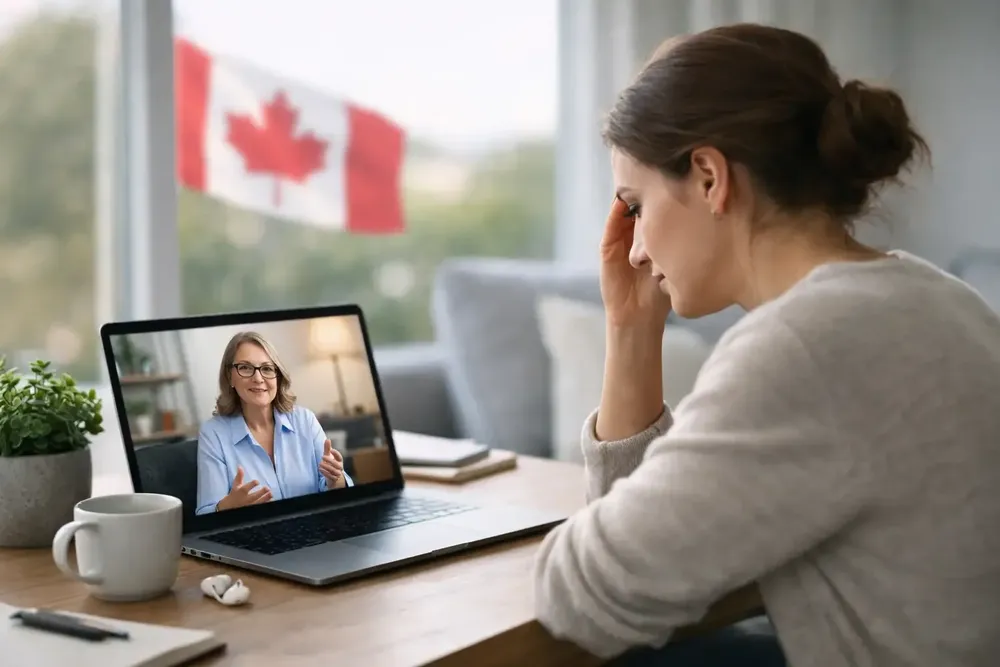
Anxiety rarely shows up as just worry. More often, it looks like lying awake replaying a conversation, feeling your chest tighten before a work meeting, snapping at people you love, or avoiding one more task because your mind already feels full. For many people, online anxiety counselling Canada offers a gentler way to reach for support - especially when leaving home, finding time, or starting with someone new already feels hard.
Virtual therapy has become a real and trusted option for Canadians who want professional care without the strain of commuting, sitting in a waiting room, or rearranging an already packed day. When anxiety is part of the picture, that convenience is not a small detail. It can be the difference between meaning to get help and actually getting it.
Why online anxiety counselling in Canada works for many people
Anxiety often narrows life. It can make ordinary decisions feel heavy and simple routines feel complicated. In-person therapy can be deeply helpful, but it is not always the easiest starting point. Online counselling creates another path.
For some clients, speaking from home helps them feel safer and more grounded. They can settle into a familiar chair, keep water nearby, wrap up in a blanket, or take a few quiet minutes after a session instead of heading straight into traffic or public transit. That sense of comfort can make it easier to be honest, especially in the early sessions when trust is still forming.
There is also the practical side. Parents, students, professionals, caregivers, and people living with health concerns may need therapy that fits around life rather than adding another stressor. Video and phone sessions can reduce barriers and make consistent care more realistic.
That said, online therapy is not identical to in-person care. Some people miss the feeling of sharing physical space with a therapist. Others find technology distracting or do not have enough privacy at home. Good care means being honest about those trade-offs instead of pretending one format works the same way for everyone.
What anxiety support should actually feel like
Effective therapy is not about being told to calm down or think positive thoughts. Anxiety usually asks for something more respectful than that. It needs space, understanding, and practical tools that match the real reasons your nervous system feels overworked.
In online anxiety counselling Canada, treatment often includes evidence-based approaches such as cognitive behavioral therapy, mindfulness-based strategies, emotion regulation work, and nervous system awareness. But methods matter less than how they are used. A thoughtful therapist pays attention to your pace, your history, and the patterns keeping anxiety in place.
For one person, anxiety may center on panic, health fears, or racing thoughts. For another, it may be tied to perfectionism, relationship strain, parenting pressure, grief, trauma, or a major life transition. Some people function well on the outside while carrying constant inner tension. Others feel stuck, tearful, avoidant, or exhausted. Real support starts by understanding your version of anxiety, not by forcing it into a script.
A strong therapeutic relationship also matters. People often come to therapy wanting coping skills, which makes sense. But skills tend to land better when you also feel emotionally safe. Being heard without judgment can lower shame, and lower shame often creates more room for change.
What to expect from online anxiety counselling Canada
Starting therapy can feel vulnerable, especially if you are used to managing everything on your own. Knowing what the process looks like can take some pressure off.
Most online counselling begins with a consultation or intake conversation. This is a chance to talk about what has been feeling difficult, ask questions, and get a sense of whether the therapist feels like a good fit. For many first-time clients, that first contact matters. Anxiety often brings hesitation, and a warm, low-pressure introduction can make support feel more possible.
In the first few sessions, your therapist will usually want to understand your symptoms, stressors, relationships, coping patterns, and goals. They may ask when anxiety tends to rise, how it affects sleep or concentration, whether it changes your appetite or mood, and what you have already tried. If anxiety is connected to health issues, family strain, or a recent diagnosis such as cancer, those experiences should be part of the conversation too.
Over time, sessions often focus on noticing patterns and practicing new responses. You might learn how anxious thoughts escalate, how avoidance keeps fear alive, or how your body signals stress before your mind catches up. Therapy can include grounding exercises, boundary work, communication support, self-compassion, or gradual steps toward situations you have been avoiding.
Progress is rarely linear. Some weeks feel lighter. Other weeks stir things up. That does not mean therapy is failing. It often means you are paying closer attention to what has been carrying too much weight for too long.
Choosing a therapist for online anxiety counselling in Canada
Finding the right therapist is not about chasing the most polished profile. It is about finding someone whose training, style, and presence help you feel both supported and understood.
Credentials matter. In Canada, the rules around regulated professions vary by province, so it is worth checking that your therapist is properly licensed or registered to provide care where you live. This is especially important for virtual services, because therapists can only practice in places where their credentials allow.
Experience matters too, but not in a flashy way. A therapist who understands anxiety should be able to work with more than surface-level stress management. They should recognize how anxiety can show up in relationships, parenting, school, work, health concerns, and self-worth. If you are seeking support as a couple or family, that experience should also be clear.
Then there is fit. Do you feel rushed or settled when you speak with them? Do they explain things clearly? Do they sound warm, grounded, and respectful? Clinical skill and human connection are not competing qualities. The best care usually includes both.
For clients in British Columbia and Ontario, virtual practices such as Rising Minds offer a model that many people find reassuring - secure online care, evidence-based support, and a compassionate approach that treats therapy as a relationship, not a transaction. That kind of balance can be especially meaningful when anxiety has already left you feeling alone.
When online therapy may be especially helpful
Online counselling can be a strong fit for people whose anxiety makes travel, scheduling, or new environments more difficult. It can also help those balancing work, caregiving, parenting, or medical appointments. For youth and adults who feel more comfortable opening up in familiar surroundings, the virtual format can reduce some of the activation that comes with starting therapy.
It may also be particularly helpful if your anxiety overlaps with other life stressors. Relationship conflict, emotional overwhelm, low self-esteem, chronic stress, and major transitions often feed into anxiety and are rarely separate from it. Therapy has room for those layers.
Still, there are times when a higher level of support is needed. If someone is in immediate crisis, feels unsafe, or is dealing with symptoms that require urgent or intensive care, online outpatient therapy may not be enough on its own. Good therapists are transparent about that and help guide people toward the level of support that fits their needs.
A more hopeful way to begin
Many people wait until anxiety becomes unbearable before reaching out. They tell themselves they should be coping better, that other people have it worse, or that this is just their personality. But anxiety is not a personal failure, and support does not need to be earned through exhaustion.
The right therapy does not ask you to show up perfectly. It asks only that you begin where you are. If online anxiety counselling Canada gives you a way to do that with more privacy, comfort, and flexibility, that beginning may be closer than it feels today. We would be honored to meet you there, and to walk alongside you as healing becomes something more than survival.