Is Virtual Counselling Confidential in Canada?
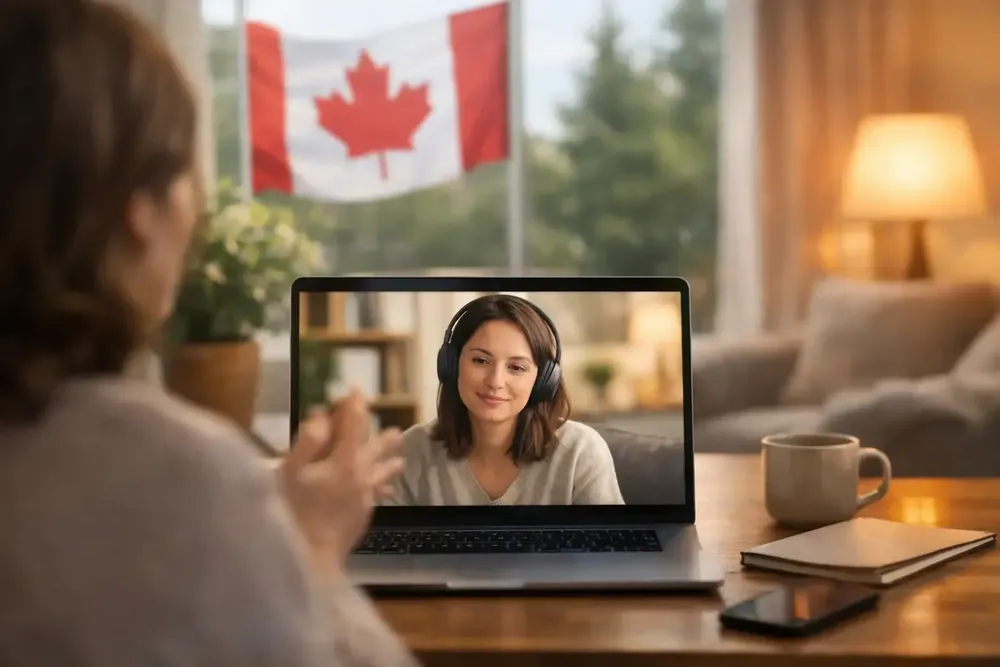
You may be sitting in your car before a video session, using headphones in a busy home, or wondering who can see what you share online. People often search “is virtual counselling confidential Canada” because privacy is not a small detail in therapy. Feeling safe enough to speak honestly is part of the healing itself.
The short answer is yes: virtual counselling in Canada is generally confidential when it is provided by a qualified professional using appropriate privacy practices and technology. But confidentiality is not a promise of absolute secrecy. Like in-person therapy, there are limited legal and ethical situations where a therapist may need to share information to protect someone from serious harm or meet a legal duty.
Understanding those boundaries before your first appointment can help you enter counselling with greater clarity, comfort, and trust.
Is virtual counselling confidential in Canada?
Virtual counselling is held to the same core confidentiality standards as in-person care. A therapist cannot casually share what you discuss with a partner, family member, employer, friend, or another health professional. Your personal information and clinical record must be handled in accordance with professional ethical obligations and applicable privacy laws.
The precise rules can depend on where you live, your therapist’s professional designation, and the province in which care is being provided. In Ontario, for example, health information privacy is commonly governed by the Personal Health Information Protection Act. In British Columbia, private practice providers have privacy obligations under provincial law, including the Personal Information Protection Act, alongside their regulatory and ethical responsibilities.
The practical meaning is simple: your therapist should collect only the information needed for care, explain how it will be used, store it carefully, and seek your consent before sharing it except where the law permits or requires disclosure.
Confidentiality and online security are related, but different
Confidentiality is the professional duty to keep your information private. Security is the set of practical measures used to reduce the chance that someone else can access it. Both matter in virtual therapy.
A responsible online counselling practice should use a platform chosen for sensitive health conversations rather than an informal social video app. It should also have clear processes for protecting client records, managing passwords and access, communicating by email, and responding if a privacy concern arises.
Still, technology cannot control every part of your environment. If you are taking a session at home, privacy may be affected by thin walls, shared devices, notifications on your screen, or someone walking into the room. This does not mean virtual counselling is unsafe. It means that privacy works best as a shared plan between you and your therapist.
You might choose a private room, use headphones, silence notifications, and sign out of shared devices. If home is not a place where you can speak freely, your therapist may be able to help you think through alternatives, such as attending from a parked car, booking a time when others are out, or using a phone session while taking a private walk where it is safe to do so.
When a therapist may need to share information
A therapist’s first aim is to protect the trust within the therapeutic relationship. There are, however, specific exceptions to confidentiality. Your therapist should review these during informed consent, using language you can understand.
Disclosure may be necessary when there is a serious and immediate concern that you or someone else could be harmed. Therapists may also have a legal duty to report suspected child abuse or neglect. A court order, subpoena, or other legal requirement can create another situation in which records or information may need to be disclosed.
There may be additional responsibilities connected to professional regulation, such as responding to a complaint or consulting appropriately to support safe clinical care. Consultation does not mean a therapist is discussing your story casually. When clinical consultation is used, professionals aim to protect identifying details and handle information with care.
The details of these exceptions vary by province and circumstance. If you are worried about a particular issue, such as self-harm thoughts, parenting concerns, immigration matters, workplace stress, or a family court process, ask directly: “What would you need to share, with whom, and when?” A compassionate therapist will welcome the question rather than make you feel judged for asking it.
What happens to your counselling notes and records?
Virtual therapy creates a clinical record, just as office-based therapy does. That record may include your contact details, intake forms, consent documents, appointment history, and notes relevant to your care. It is not a transcript or recording of every conversation.
Sessions are generally not recorded without your knowledge and consent. If a therapist has a reason to discuss recording, they should explain why it is being considered, how the recording would be protected, who could access it, and how long it would be kept.
Professional records are normally retained for a period set by law, regulation, or professional standards. The exact retention period can differ based on the therapist’s profession, province, and whether the client is an adult or minor. You can ask how long records are kept, whether you can request access to them, and how corrections to factual information are handled.
It is also reasonable to ask where electronic records are stored. Some services use Canadian data storage, while others may use service providers whose data processing involves another country. There is no need to assume the worst, but you deserve a plain answer about a practice’s approach to data storage and privacy.
Privacy questions worth asking before you begin
A brief consultation can be a gentle place to ask practical questions before sharing personal details. Consider asking:
- Which video or phone platform do you use, and how is it selected for privacy?
- Will sessions ever be recorded, and what would my consent look like?
- How do you communicate by email, text, or voicemail?
- Where are my records stored, and who can access them?
- What are the limits of confidentiality in my situation?
- What should we do if my connection drops during a session or I am in immediate distress?
The answers do not need to sound overly technical. What matters is that the practice is transparent, takes your questions seriously, and has a thoughtful plan.
Extra considerations for couples, families, and youth
Confidentiality can become more nuanced when more than one person is involved in therapy. In couples or family counselling, a therapist should explain who the client is, how records are managed, and whether there is a “no secrets” policy. Some therapists may decide that information disclosed privately by one partner cannot be kept from the other if it is relevant to the shared therapy work. This policy should be discussed before therapy begins, not discovered in the middle of a difficult conversation.
For youth, privacy also depends on age, maturity, capacity to consent, and provincial law. A young person may have meaningful privacy rights in counselling, while parents or guardians may still be involved in decisions or records in certain circumstances. The goal is to balance a youth’s need for a trusted space with appropriate care, safety, and family involvement.
If your family is navigating conflict, separation, co-parenting stress, or a child’s emotional overwhelm, clear expectations at the start can prevent misunderstandings later.
How to create a more private virtual therapy space
Privacy is not about getting everything perfect. It is about reducing interruptions and helping your nervous system settle enough to be present. Before a session, choose the most private location available, wear headphones if you can, and keep your device locked with a passcode. Avoid using public Wi-Fi when possible, and be thoughtful about whether a shared email account or family computer is appropriate for counselling communication.
You can also tell your therapist what privacy challenges you are managing. Maybe your partner works from home, your children are often nearby, or you are caring for someone who needs frequent attention. Together, you can create a plan that honors your reality rather than asking you to force a level of privacy that is not currently possible.
At Rising Minds Counselling and Psychotherapy, virtual care is approached as a relationship built on respect, emotional safety, and informed choice. A secure platform matters, but so does having a therapist who slows down, explains the process, and makes room for your questions.
You do not have to share your deepest experiences in the first few minutes of counselling. Trust can grow gradually. Start with what feels manageable, ask what you need to ask, and allow yourself the care of being supported in a space designed to honor your privacy and your story.