A Guide to Online Couples Counselling
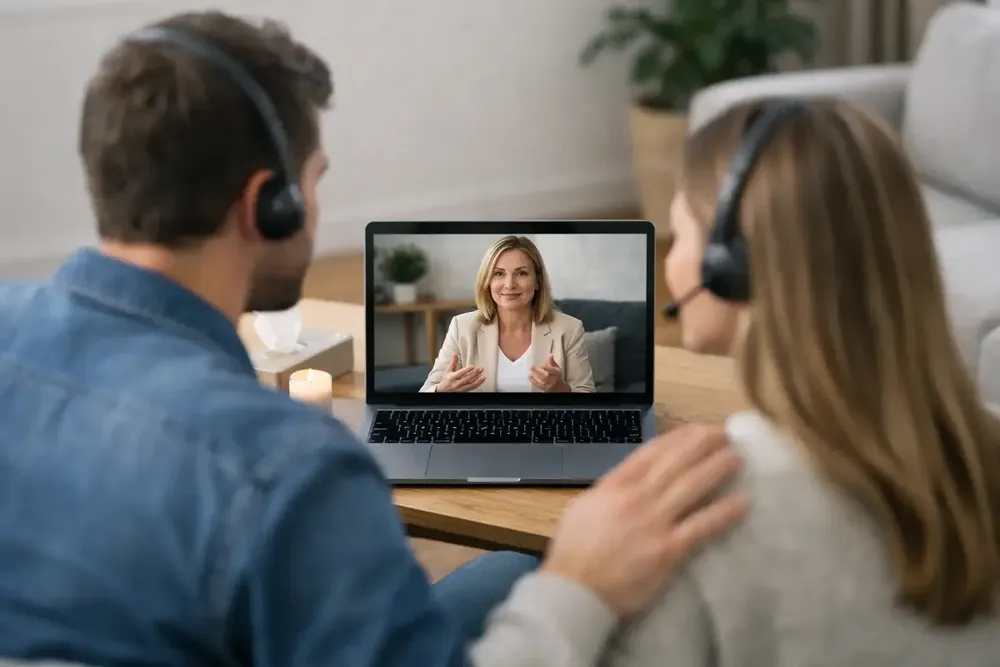
Some couples reach for support after the same argument keeps repeating. Others come in after trust has been shaken, intimacy feels distant, or the stress of parenting, illness, work, or life transitions has started to crowd out connection. A guide to online couples counselling should make one thing clear from the start - you do not have to wait until your relationship is in crisis to ask for help.
Online couples counseling can offer a calm, structured space to slow things down and understand what is happening beneath the surface. For many couples, meeting virtually also removes a practical barrier. It is often easier to show up consistently when support is available from home, from separate locations, or around full schedules.
What online couples counseling actually is
Online couples counseling is therapy for partners delivered through secure video or phone sessions rather than in-person meetings. The goal is not to decide who is right. It is to help both people understand patterns, communicate with more honesty and care, and build a healthier way of relating.
That can include working through conflict, rebuilding trust, navigating parenting stress, adjusting to a major life change, or understanding how anxiety, burnout, trauma, or family history may be affecting the relationship. In some cases, couples want to stay together and strengthen their bond. In others, they need support making thoughtful decisions about separation, co-parenting, or how to move forward with dignity.
A good therapist holds space for both people while also paying attention to safety, emotional regulation, and the deeper dynamics that keep a couple stuck. That balance matters. Relationship pain is rarely solved by communication tips alone when attachment wounds, past trauma, resentment, or long-standing disconnection are also present.
Who tends to benefit from a guide to online couples counselling
Many people assume couples therapy is only for marriages on the edge. In reality, it can help at many stages of a relationship.
Some couples come in because they are fighting often and getting nowhere. Others are not fighting much at all, but they feel emotionally far apart. Some are trying to recover after betrayal. Some are preparing for marriage, a new baby, blending families, caregiving demands, or the impact of illness. Others are navigating divorce conversations and want support that protects respect and reduces harm, especially when children are involved.
Online care can be especially helpful for couples who travel, live in different homes, have demanding work schedules, or feel more comfortable opening up in familiar surroundings. It can also be a gentler entry point for people who have never been to therapy before and feel nervous about starting.
There are limits, and honesty about them matters. If there is ongoing abuse, coercive control, or fear for anyone's safety, couples therapy may not be the right starting point. In those situations, individual support and safety planning are often more appropriate.
What happens in online couples counseling sessions
The first few sessions usually focus on understanding the relationship story, the concerns bringing you in, and the patterns each partner notices. A therapist may ask about communication, conflict cycles, trust, emotional closeness, family background, stress, and what each person hopes will change.
From there, the work becomes more specific. One couple may need help interrupting criticism and defensiveness. Another may need to rebuild emotional safety after betrayal. Another may need support expressing needs without shutting down or escalating.
Sessions often include practical skill-building, but the deeper work is usually about meaning and emotion. Why does one partner withdraw when tension rises? Why does the other pursue harder when they feel ignored? Why does a simple disagreement suddenly feel so loaded? These moments are rarely random. They are often linked to fear, pain, or old protective patterns.
A compassionate, evidence-based therapist helps slow these moments down so both partners can recognize what is happening in real time. That is where change begins - not in winning the argument, but in understanding the cycle and choosing a different response.
The real benefits of meeting online
Virtual therapy is not a lesser version of care. For many couples, it is what makes care possible.
The convenience is obvious, but there is more to it than convenience. When sessions happen in a familiar setting, some people feel less guarded. Couples who live apart can still attend together. Parents do not need to build an entire day around travel time. Partners with different schedules may find it easier to protect consistent appointments.
There are trade-offs too. Some couples find it harder to stay present on screen, especially if home is noisy or privacy is limited. Internet issues can interrupt emotionally important moments. And for a small number of couples, the physical presence of an office helps them feel more contained.
That is why fit matters more than format. Online work can be deeply effective when the therapist is skilled, the platform is secure, and both partners have enough privacy to speak openly.
How to know if a therapist is the right fit
Not every couples therapist works the same way. That matters because relationship therapy requires more than general support. It helps to look for someone with training in couples work, a trauma-informed lens, and a style that feels steady rather than reactive.
You want a therapist who can care about both people without collapsing into neutrality that avoids hard truths. Good couples work is balanced, but it is not passive. A skilled therapist notices harmful patterns, helps de-escalate conflict, and stays attentive to each person's dignity.
It can also help to ask how the therapist approaches common issues like conflict, trust repair, attachment patterns, emotional regulation, parenting strain, or separation decisions. Some draw from approaches like the Gottman Method, family systems work, CBT, ACT, DBT-informed skills, IFS, or compassion-based frameworks. The exact blend matters less than whether the therapist can explain their approach clearly and help you feel safe enough to do honest work.
For Canadian couples seeking virtual support, it is also worth confirming where the therapist is licensed to practice and whether they can work with clients in your province. That practical detail can save stress later.
How to get the most out of online couples counseling
Showing up is only part of the process. Couples tend to get more from therapy when they come in willing to be curious, not just convincing.
That does not mean you need to be calm and polished every session. Real therapy is often messy. It does mean being open to examining your own part in the pattern, even when you feel hurt. Lasting change usually happens when both partners begin to notice not only what the other person is doing, but what they themselves do when they feel afraid, rejected, criticized, or alone.
It also helps to protect the space around the session. Give yourselves a few quiet minutes before logging on if possible. Try not to rush straight from work, childcare, or an argument at the door into the appointment. Afterward, allow some room to settle. Hard conversations can leave both people feeling tender.
Between sessions, small changes matter. A softer startup. A pause before reacting. A more direct request. A moment of repair after tension. Therapy rarely changes a relationship all at once. More often, it helps create enough safety and awareness for different moments to accumulate.
When progress feels slow
This is one of the hardest parts for couples to tolerate. Progress in relationship therapy is rarely linear. Some weeks feel relieving. Others stir up grief, anger, or old disappointment.
Slow progress does not always mean therapy is failing. Sometimes it means deeper layers are finally being named. Sometimes one partner is moving faster than the other. Sometimes a couple is deciding whether repair is truly possible, and that takes time.
What matters is whether the work is becoming clearer. Are you understanding your cycle better? Are conversations slightly less explosive or less avoidant? Are moments of repair happening sooner? Is there more honesty, even if it feels uncomfortable? These are often meaningful signs of movement.
At Rising Minds Counselling & Psychotherapy, this kind of work is approached with warmth, respect, and evidence-based care, because relationships need more than advice - they need room for trust, honesty, and healing.
Seeking support for your relationship is not a sign that you have failed each other. Often, it is a sign that the relationship matters enough to treat with care. If you are considering online couples counseling, start with the hope that change is possible, and let the first step be simple: a conversation where both of you feel heard.